Goblin Slayer Review: Where Fantasy's Cheapest Monster Finally Gets Taken Seriously
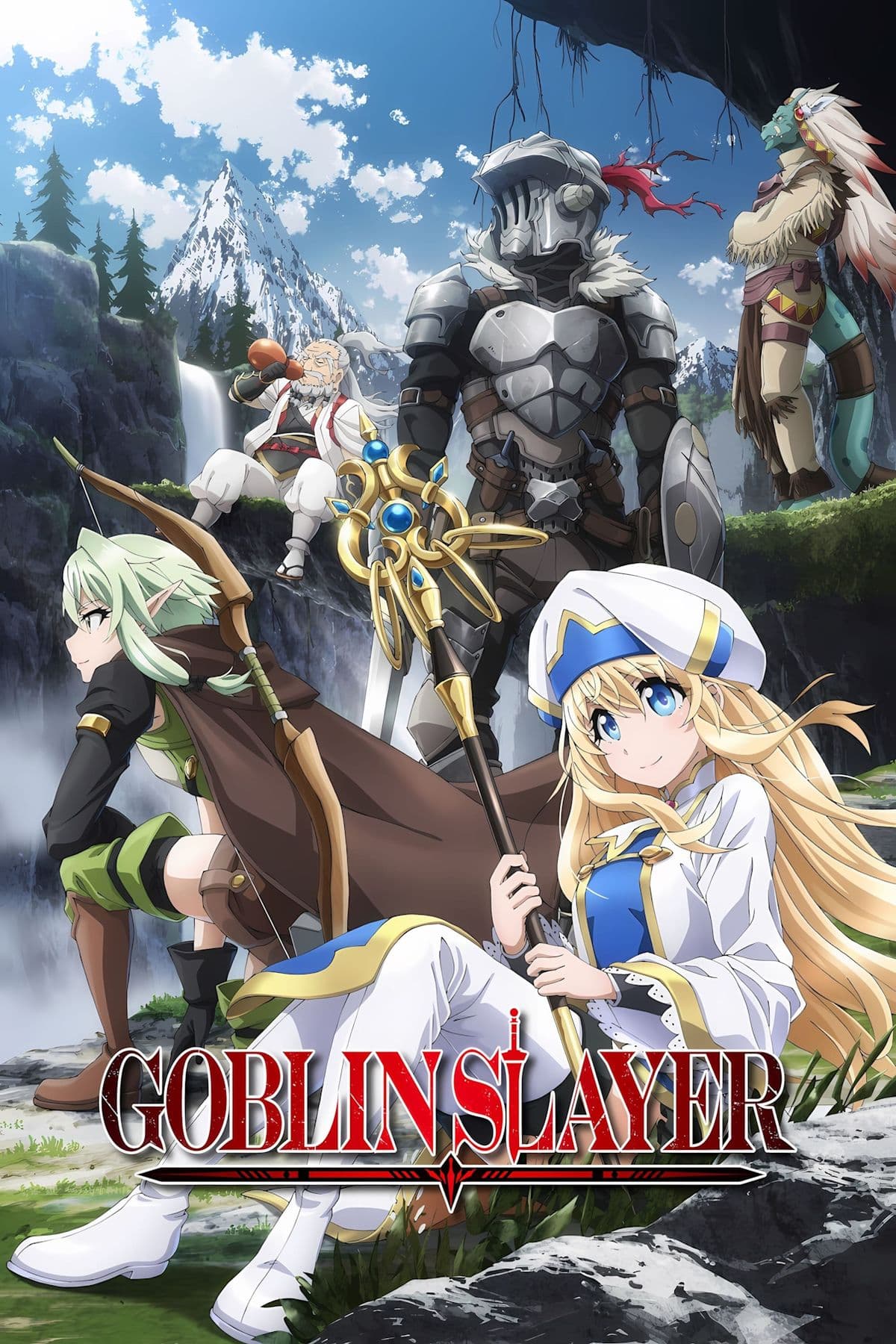
Goblin Slayer Review
Based on direction, story, and acting
What Works (The Good)
- Goblin Slayer's tactical, pragmatic approach to combat is genuinely refreshing
- The series treats goblins as a real threat, not disposable enemies
- Strong voice cast in both Japanese and English
- Season 1 animation (White Fox) delivers visceral, well-choreographed action
- The farm defense arc in the Season 1 finale is a standout sequence
What Doesn't (The Bad)
- The first episode's graphic sexual violence is a hard barrier for many viewers
- Anime strips out Goblin Slayer's internal monologue, losing the tactical reasoning that defines him
- Entire light novel volumes (3-4) were skipped, creating continuity gaps
- Season 2's studio change (White Fox to Liden Films) resulted in a significant quality drop
- Characters remain nameless and largely defined by their archetypes
The Setup: The Forgotten Monster
In a world where heroes save villages from dragons and demons, no one takes goblins seriously. They're cannon fodder. Tutorial enemies. The kind of monster you send rookies to deal with because nothing ever goes wrong. Goblin Slayer (Yūichirō Umehara) is the only person who disagrees. He is a Silver-ranked adventurer who has devoted his entire life to one goal: slaying every single goblin that exists. He doesn't take other quests. He doesn't save the world. When asked to join a quest to defeat the revived Demon Lord, his response is simple: "I'm not interested. Unless it involves goblins."
The series begins with a group of fresh adventurers — a Warrior, a Mage, a Fighter, and a 15-year-old Priestess (Yui Ogura) — entering a goblin cave. It ends with most of them dead, one of them permanently traumatized, and the Priestess rescued at the last moment by a man in full armor who mercilessly butchers the creatures without hesitation[citation:4][citation:8]. That opening episode, infamous for its graphic depiction of sexual violence, set the tone for a series that refuses to soften its world[citation:1][citation:4].
The Plot: Strategic Butchery, Not Epic Battles
What follows is not a story about defeating a Dark Lord. It's a series of missions, each centered on clearing out goblin nests. The show follows Goblin Slayer as he builds an unlikely party: the traumatized Priestess, a 2,000-year-old High Elf Archer (Nao Tōyama) who finds his methods crude, a Dwarf Shaman (Yūichi Nakamura) who acts as a living encyclopedia, and a Lizard Priest (Tomokazu Sugita) who is mostly interested in cheese[citation:4][citation:16].
The episodic structure works in its favor. Each mission feels like a tabletop RPG session, with Goblin Slayer as the hyper-prepared player who has already thought of everything. He uses flour dust explosions. He carries a short sword because large weapons won't fit in narrow caves. He sets traps, repurposes enemy weapons, and never fights a goblin without a plan[citation:16][citation:14]. As the series progresses, hints of a larger conspiracy emerge — goblins using boats, a mysterious mirror connecting to another dimension, a Sword Maiden (Aya Endo) with her own painful history[citation:20].
The Characters: Names Are for Other People
None of the main characters have proper names. They are Goblin Slayer, Priestess, High Elf Archer, Dwarf Shaman, Lizard Priest, Cow Girl, Guild Girl, Sword Maiden. This is intentional. The series functions like a tabletop role-playing game, and the characters are defined entirely by their roles and their relationships to the mission[citation:4][citation:16].
Goblin Slayer himself is the most compelling figure. He is heavily implied to be on the autism spectrum — his one-track mind, his dependence on routine, his failure to pick up on social cues, and his refusal to remove his helmet for any reason[citation:4]. But as the light novels reveal more explicitly, he is also a deeply traumatized survivor. He witnessed his older sister's assault and murder by goblins as a child, hiding under the floorboards of his own home[citation:16]. His obsession is not a quirk. It is a survival mechanism. Every goblin he kills is a goblin that won't destroy another village.
Priestess serves as the audience surrogate. She is naive, kind, and initially horrified by Goblin Slayer's brutality. Over the series, she grows from a terrified survivor into a capable adventurer who understands why he does what he does[citation:16]. High Elf Archer provides the moral counterpoint — she's the one who says "this isn't right" when Goblin Slayer kills goblin children, though the show makes clear that leaving them alive means they'll grow up to do exactly what their parents did[citation:16].
Acting and Production: Solid Work Held Back by Adaptation Choices
The voice cast is strong across both Japanese and English dubs. Yūichirō Umehara gives Goblin Slayer a flat, almost robotic delivery that slowly reveals cracks of humanity. Brad Hawkins channels John Wick in the English dub, which is both accurate and surprisingly effective[citation:5].
White Fox's animation in Season 1 is genuinely good when it counts. The cave fight in Episode 1, the Ogre battle in Episode 4, and the farm defense in the finale all land with real weight[citation:14]. The score by Kenichiro Suehiro gives the series a cold, tense atmosphere that fits its tone[citation:14].
The Verdict: Read the Light Novels First
The anime is a solid entry point. But it is not the complete version of the story.
The biggest loss is Goblin Slayer's internal monologue. In the light novels, you hear him think — calculating threat levels, counting enemies, running through contingencies, explaining exactly why he uses a shield or carries multiple short swords or spreads flour dust in a room with a torch[citation:14]. The anime shows you what he does. The novel tells you why. That "why" transforms him from a weird, stoic killing machine into a traumatized tactician who has optimized every variable because the alternative is someone else suffering what he suffered[citation:14].
The adaptation also skips Volumes 3-4 of the light novel entirely, including the fan-favorite Harvest Festival arc. The dagger Goblin Slayer uses in Season 2 is a gift he received in that arc. Anime-only viewers have no idea where it came from[citation:14].
And Season 2, produced by Liden Films instead of White Fox, is widely considered a significant step down in quality. The community consensus is blunt: the storytelling, the production, the unique feel of Season 1 — all of it is gone[citation:14].
Score: 7.5/10 for the anime. The light novels are a 9.
Verdict: Must Watch for dark fantasy fans — but go in prepared. The first episode is not for everyone, and the anime is only half the story.
Trigger warning: The first episode includes graphic depictions of sexual violence. This is consistent with the source material and serves to establish the goblins as genuinely monstrous, not comic relief. Viewer discretion is strongly advised.[citation:1][citation:4]
The Cineverse Technical Breakdown
More in Anime
View all Anime reviews →
Chainsaw Man Review: Blood, Guts, and a Teenage Boy Who Just Wants a Girlfriend
A teenage boy makes a deal with a chainsaw devil and becomes a devil hunter — but all he really wants is a normal life, a warm meal, and someone to love him.
Dr. Stone Review: Science, Senku, and the Most Optimistic Apocalypse Ever
After humanity is petrified for 3,700 years, a teenage genius wakes up in a stone world and decides to rebuild civilization from scratch using the power of science.

Gintama Review: The Anime That Taught Us To Laugh At Everything, Including Ourselves
In an alternate Edo period where aliens have conquered Japan, a broke samurai and his oddball friends take on any job they can find — from finding lost cats to saving the world.