Oppenheimer Movie Review: Christopher Nolan's Haunting, Masterful Symphony of Fire and Conscience
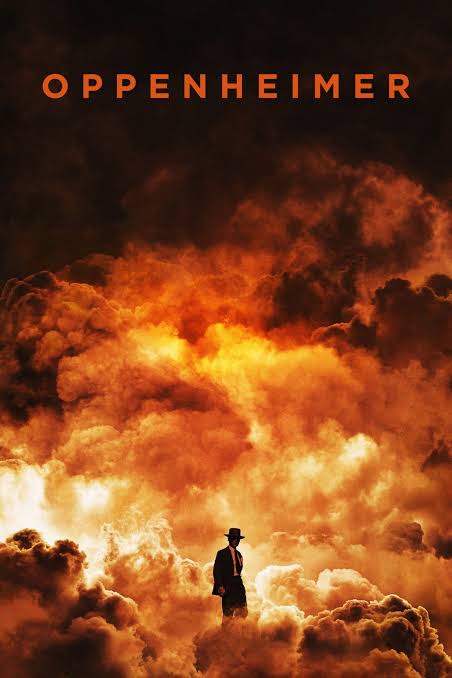
Oppenheimer Movie Review
Based on direction, story, and acting
What Works (The Good)
- Cillian Murphy's career-crowning, deeply introspective portrayal of J. Robert Oppenheimer
- Robert Downey Jr.'s sensational, Oscar-worthy masterclass as Lewis Strauss
- Ludwig Göransson's pulse-pounding, relentless auditory score
- Hoyte van Hoytema's spellbinding IMAX 70mm analog cinematography and black-and-white tonal contrast
- The Trinity Test sequence stands as one of cinema's most terrifyingly beautiful visual achievements
What Doesn't (The Bad)
- Dense three-hour timeline with multiple political sub-hearings requires razor-sharp audience attention
- Female supporting characters, while acted brilliantly, receive relatively limited screen time
The Father of the Atomic Bomb: A Modern Prometheus
Christopher Nolan has spent his extraordinary career bending time, constructing multi-layered dream architectures, and traversing deep interstellar wormholes. Yet, in Oppenheimer, he undertakes what is easily his most terrifying and deeply philosophical experiment: journeying deep into the labyrinth of the human mind at the exact juncture when mankind uncovered the secret to its own total annihilation.
Structured like a high-stakes psychological courtroom thriller rather than a conventional, reverent historical biopic, Oppenheimer tracks the rise, moral collapse, and brutal political crucifixion of J. Robert Oppenheimer. By alternating between Fission (the subjective, colorful world through Oppenheimer’s perspective) and Fusion (the stark, objective, black-and-white political witch-hunt orchestrated by Lewis Strauss), Nolan crafts a three-hour audiovisual symphony that leaves you gasping for breath.
Plot & Historical Tapestry: The Los Alamos Genesis
The film charts Oppenheimer’s early academic days across Cambridge, Göttingen, and Berkeley, where he introduced theoretical quantum physics to an unsuspecting American academia. Recognizing the existential threat of Nazi Germany developing an atomic bomb first, General Leslie Groves (Matt Damon) recruits Oppenheimer to head the ultra-secret Manhattan Project in the remote desert canyons of Los Alamos, New Mexico.
What follows is an exhilarating scientific race against time, culminating in the historic Trinity Test on July 16, 1945. But where most filmmakers would place the bomb's detonation as the climatic conclusion, Nolan places it at the two-hour mark. The final hour is a merciless, claustrophobic deconstruction of Cold War McCarthyism, back-room political vendettas, and the suffocating guilt that consumed the theoretical physicist who realized he had given humankind the matches to burn down their own world.
Acting Masterclass: Murphy, Downey Jr., and a Stellar Ensemble
Cillian Murphy delivers a performance for the ages. With his hollowed cheeks, brimmed fedora, and incandescent, haunted blue eyes, Murphy does not simply play Oppenheimer; he channels his very ghost. His physical transformation, capturing both intellectual arrogance and bone-deep moral trauma, is utterly mesmerizing. The post-Hiroshima gym celebration scene—where roaring crowds morph into blinding atomic flashes and peeling flesh—is visual and psychological terror of the highest order.
Equally staggering is Robert Downey Jr. as Lewis Strauss, the Chairman of the Atomic Energy Commission. Shedding every vestige of Marvel superhero mannerisms, Downey delivers a venomous, petty, calculating, and painfully wounded performance that rightly swept award seasons worldwide. Emily Blunt brings fierce dignity to Kitty Oppenheimer, delivering an unforgettable, spine-chilling testimony against hostile inquisitors in the cramped security clearance room.
Audiovisual Wonder: Ludwig Göransson and Hoyte van Hoytema
There are no CGI effects used to simulate the atomic explosion—a hallmark of Nolan’s steadfast commitment to practical analog filmmaking. Hoyte van Hoytema’s IMAX cameras linger intimately on trembling human expressions, making a conversational drama feel as colossal and terrifying as an intergalactic clash.
The unsung architect of Oppenheimer's harrowing velocity is Swedish composer Ludwig Göransson. Rejecting traditional brass and percussion in favor of frantic, spiraling violins, Geiger counter clicks, and synthesizer undertones, Göransson's score acts as the physical manifestation of Oppenheimer's racing synapses. When sound completely drops during the Trinity explosion, the eerie silence before the shockwave arrives is one of the most sublime moments in 21st-century cinema.
The Cineverse Verdict
Oppenheimer is a monumental, awe-inspiring achievement. It refuses easy answers, avoids self-righteous moral preaching, and forces the viewer to confront the harrowing reality of our modern thermonuclear existence. It is an undeniable masterpiece that cements Christopher Nolan as the definitive auteur of our generation.
A towering 4.8 out of 5 stars. Experience it in the best sound system you can find.
The Cineverse Technical Breakdown
More in Hollywood
View all Hollywood reviews →
Street Fighter Review: The Movie That Killed Jean-Claude Van Damme's Career (And Raul Julia's Legacy)
The 1994 adaptation of the beloved video game is a chaotic, nonsensical mess — but Raul Julia's Bison makes it a strangely unforgettable experience.

Dragon Nest: Warriors' Dawn Review — A Generic Fantasy That Never Finds Its Wings
An adaptation of the popular MMO that delivers generic fantasy beats, paper-thin characters, and a story that plays like a cutscene compilation rather than a film.
Jumanji: Welcome to the Jungle Review — The Rock, Kevin Hart, and Jack Black Walk Into a Video Game
Four teenagers get sucked into a video game and must survive as their avatars — The Rock, Kevin Hart, Jack Black, and Karen Gillan — in a hilarious, crowd-pleasing adventure.